Gst-Audit: The instrumentation tool for your pipelines
gstreamer, open-source, events, beaverThis blog post provides an overview of the Gst-Audit open source project, how it was born, and the technical challenges on building it
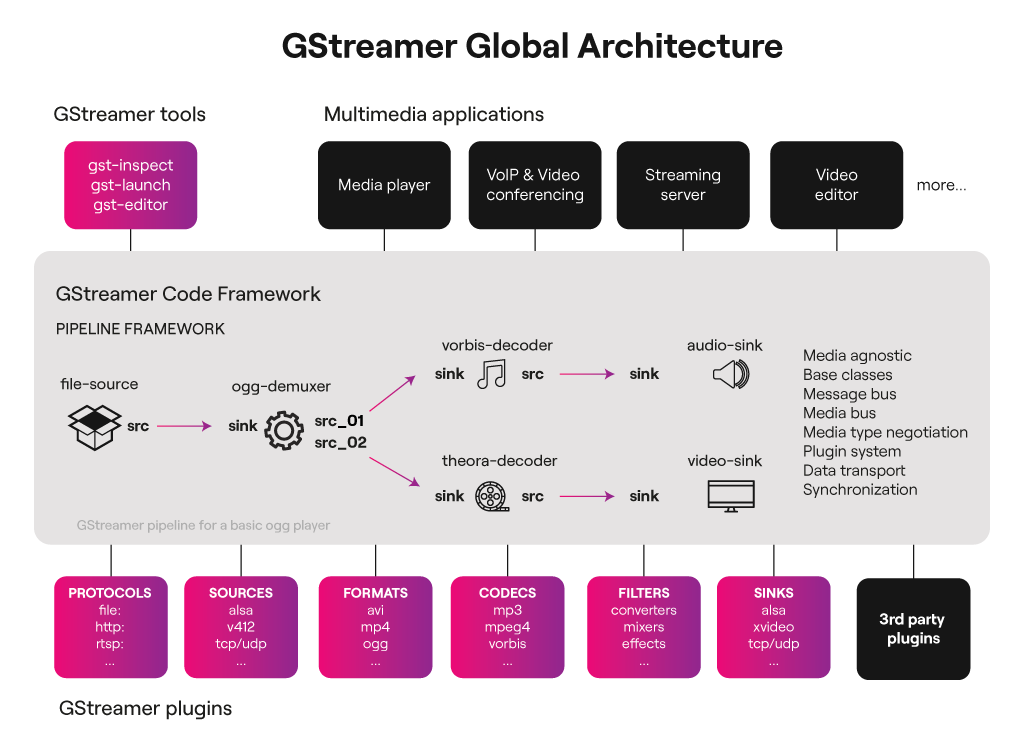
GStreamer is a versatile, pipeline-based multimedia framework that seamlessly connects various media processing tools, enabling efficient, complex multimedia workflows across platforms.


GStreamer is a powerful, open-source multimedia framework packed with features. It is mainly used to develop media applications for streaming, playback, non-linear editing, and more. Designed to simplify building applications that handle audio, video, and synchronized metadata, GStreamer leverages a flexible plugin system, providing various codecs and media processing tools.
Compatible with all major operating systems— including Linux, Android, Windows, macOS, and iOS —GStreamer also supports diverse hardware architectures such as x86, ARM, MIPS, and SPARC. It offers an extensive library of multimedia plugins (encoders, decoders, filters, etc.) and allows easy integration of third-party plugins. With comprehensive, developer-friendly documentation and a robust community contributing to its continuous development, GStreamer is a top choice for creating complex, efficient multimedia workflows.

GStreamer is a powerful, open-source multimedia framework packed with features. It is mainly used to develop media applications for streaming, playback, non-linear editing, and more. Designed to simplify building applications that handle audio, video, and synchronized metadata, GStreamer leverages a flexible plugin system, providing various codecs and media processing tools.
Compatible with all major operating systems— including Linux, Android, Windows, macOS, and iOS —GStreamer also supports diverse hardware architectures such as x86, ARM, MIPS, and SPARC. It offers an extensive library of multimedia plugins (encoders, decoders, filters, etc.) and allows easy integration of third-party plugins. With comprehensive, developer-friendly documentation and a robust community contributing to its continuous development, GStreamer is a top choice for creating complex, efficient multimedia workflows.

Working with multimedia is challenging. Therefore, selecting the correct framework to process audio and video streams is crucial to ensuring a successful project. In Fluendo, we believe that developers should consider the following:
GStreamer stands out in each of these areas. Its intelligent plugin architecture and robust core library simplify application development, offering reliable, well-tested components to meet diverse multimedia needs.


Working with multimedia is challenging. Therefore, selecting the correct framework to process audio and video streams is crucial to ensuring a successful project. In Fluendo, we believe that developers should consider the following:
GStreamer stands out in each of these areas. Its intelligent plugin architecture and robust core library simplify application development, offering reliable, well-tested components to meet diverse multimedia needs.
Fluendo offers a complete suite of GStreamer-based audio and video plugins, each equipped with patent licensing for commercial use. These plugins are compatible with any operating system (Windows, macOS, Linux, Android, and iOS) and can also integrate with other multimedia frameworks, such as FFmpeg, through our developed Enablers.
Designed for multimedia developers, the Fluendo SDK provides an intuitive API that enables seamless, GStreamer-powered media playback on applications across supported operating systems (Windows, Linux, macOS, Android, and iOS) and architectures, including x86, x86_64, and ARM.
We put our expertise and support at your disposal to optimize or port plugins across hardware platforms or to develop new plugins and features tailored to your project’s needs. With our consulting services, we can help your business grow.

Fluendo offers a complete suite of GStreamer-based audio and video plugins, each equipped with patent licensing for commercial use. These plugins are compatible with any operating system (Windows, macOS, Linux, Android, and iOS) and can also integrate with other multimedia frameworks, such as FFmpeg, through our developed Enablers.
Designed for multimedia developers, the Fluendo SDK provides an intuitive API that enables seamless, GStreamer-powered media playback on applications across supported operating systems (Windows, Linux, macOS, Android, and iOS) and architectures, including x86, x86_64, and ARM.
We put our expertise and support at your disposal to optimize or port plugins across hardware platforms or to develop new plugins and features tailored to your project’s needs. With our consulting services, we can help your business grow.

our case studies
Developments that bring real-world results, these case studies show how our solutions help your business achieve goals and enhance user experiences.

The company is a technology integrator specialized in complex engineering projects, delivering scalable video infrastructure for government and defense systems. As part of a major public-sector initiative, Fluendo expanded the client’s Recasting & Recording System (RRS) to support real-time video stream ingestion, advanced recasting and recording formats, video transcoding, and asynchronous event notifications. Leveraging a modular GStreamer-based architecture, these enhancements were seamlessly integrated in a short timeframe, ensuring high performance, long-term scalability, and reliability for mission-critical multimedia operations.

The company delivers advanced technology solutions that enhance public safety and border security, protecting critical infrastructure for nations worldwide, including multiple NATO members. To support these mission-critical requirements, Fluendo developed a highly modular video streaming and recording platform based on GStreamer, designed as a proof of concept for secure, scalable multimedia systems.
The solution features configurable streaming protocols, RTSP to WebRTC conversion, advanced metadata handling, and automated video recording and post-processing tools. With JSON-based configuration, dedicated desktop and browser clients, and robust metadata injection and storage, the platform ensures ease of integration, interoperability, and long-term expandability for public-sector and defense environments.
Features such as JSON-based configuration, RTSP to WebRTC conversion, dedicated desktop and browser clients, and robust metadata injection and storage ensure ease of use, compatibility, and expandability.

The company is an innovative leader in XR (Extended Reality) solutions, delivering immersive telepresence experiences through advanced wearable technologies for the industrial, education, and entertainment sectors. To enhance performance on next-generation XR devices, the company partnered with Fluendo to optimize GStreamer multimedia pipelines for XR glasses powered by NVIDIA Jetson TX2.
Through a collaborative technical workshop, Fluendo conducted an in-depth analysis of the existing video pipeline architecture, focusing on image quality enhancement, latency reduction, CPU and GPU consumption optimization, and bandwidth efficiency. Based on these findings, Fluendo’s experts delivered actionable recommendations, proposed scalable architectural improvements, and defined a tailored implementation strategy designed for high-performance, low-latency XR environments.

The company develops autonomous marine vehicles for long-duration missions in remote and harsh environments, supporting environmental monitoring, inspection, and research applications. These platforms require reliable, real-time video communication even under limited or unstable bandwidth conditions.
To address these challenges, the company partnered with Fluendo to design a real-time video streaming solution tailored to demanding marine scenarios. Fluendo implemented a GStreamer-based multimedia pipeline leveraging hardware-accelerated video codecs and WebRTC to ensure low-latency, high-quality video capture and transmission. A user-friendly graphical interface was also developed, allowing mission operators to view live video feeds directly from the vessel, enhancing situational awareness and operational efficiency.

The company develops a modern AI-powered camera system designed to create safer workplaces and enable smarter business operations across industries. To strengthen its multimedia engineering capabilities, the company partnered with Fluendo to enhance its team’s expertise in GStreamer with a strong focus on Rust-based development.
Recognizing Rust’s growing adoption for its memory safety and high performance, Fluendo delivered a six-day, hands-on training program combining GStreamer fundamentals with modern Rust practices. Participants were guided through pipeline creation, memory-safe plugin development, interoperability with existing C APIs, and debugging complex multimedia workflows within the Rust ecosystem. The progressive structure of the sessions enabled engineers to directly apply their learnings to the company’s AI video processing products.
our use cases
These use cases present conceptual examples of how our ideas and technologies could address real-world industry challenges.

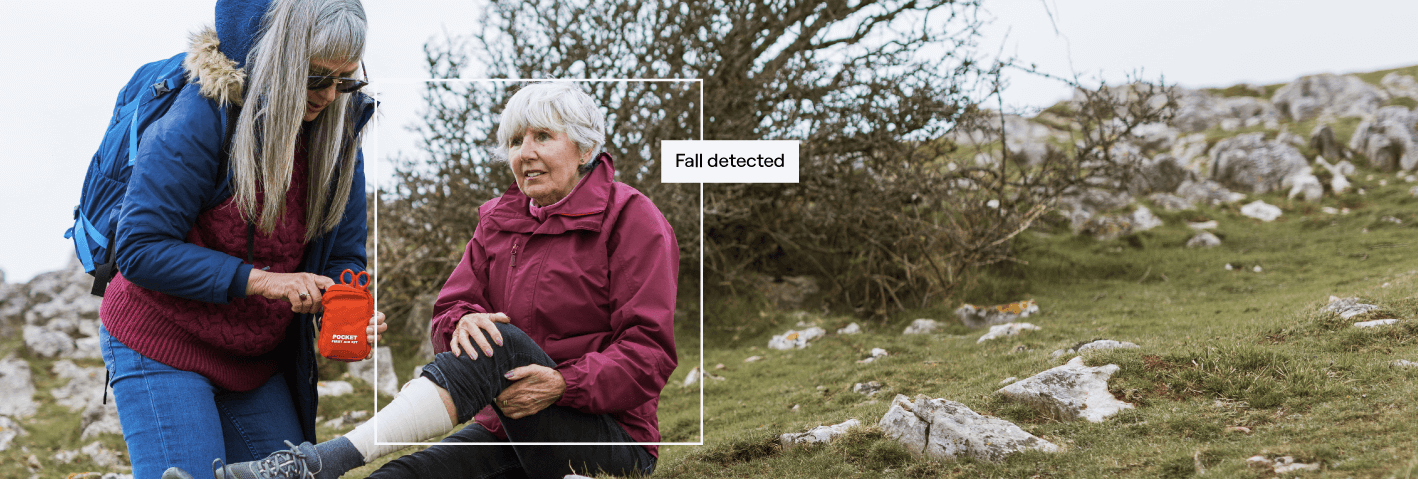
In high-risk environments such as elderly care facilities, hospitals, public transit stations, or workplace safety zones, detecting human falls instantly is essential for preventing serious injuries and enabling rapid emergency response. However, continuous manual video surveillance monitoring is resource-intensive and prone to oversight.
A growing need exists for automated fall detection systems that operate in real-time, are accurate, and respect user privacy. Such a system would assist caregivers, security teams, or emergency responders by automatically identifying falls and triggering alerts, without relying on wearable sensors.
With advancements in AI pose estimation systems, a computer vision–driven solution could be deployed directly on-site to provide privacy-compliant, accurate, and low-latency fall detection.

Public spaces such as transportation hubs, university campuses, shopping centres, and event venues face growing security risks from both concealed and openly carried knives. These threats put heavy pressure on security teams to detect weapons quickly and respond before incidents escalate. Traditional manual monitoring of multiple CCTV or IP camera feeds is labour-intensive and prone to human error and delayed reactions, particularly in crowded or fast-moving environments.
An AI-powered, real-time knife detection system can significantly improve situational awareness by automatically scanning live video streams for potential weapons and sending instant alerts to security personnel. Thanks to recent advances in computer vision and low-latency edge computing, these intelligent detection models can now be seamlessly integrated into existing surveillance networks without costly infrastructure changes.

In modern live broadcasting and video surveillance, operators struggle to keep moving subjects framed when using traditional PTZ (Pan-Tilt-Zoom) cameras in dynamic environments such as lecture halls, theaters, or public spaces. An AI-driven subject tracking solution can autonomously detect and follow speakers, performers, or persons of interest, reducing reliance on manual control and ensuring consistent coverage.
By integrating real-time subject tracking with PTZ hardware, this technology maintains consistent coverage even when subjects move unpredictably. Recent breakthroughs in low-latency edge computing make it possible to deploy this system on-site for both live event production and security surveillance, delivering precise and reliable tracking without additional operators.
Recent low-latency edge computing advancements make precise subject tracking feasible for both live production and surveillance.

Historic sports footage represents a valuable asset for broadcasters, clubs, sports federations, and media archives. However, many classic matches were recorded in low resolutions, analog formats, or early digital standards, resulting in blurry visuals, limited detail, and reduced viewing quality on modern displays.
Manually restoring and enhancing these recordings is complex, time-consuming, and often requires specialized post-production workflows. As demand grows for remastered sports content, documentaries, digital archives, and modern streaming platforms, improving the quality of historic footage has become increasingly important.
With advancements in AI-based superresolution, computer vision models can reconstruct missing details and upscale legacy sports videos to higher resolutions. By processing video frames automatically, such systems can transform historic recordings into clearer, sharper versions suitable for modern screens while preserving the authenticity of the original footage.
Bits & Bytes
Explore our blog, one byte at a time. Our team unpack our latest news, industry insights and in-depth articles to connect you with the multimedia world.This blog post provides an overview of the Gst-Audit open source project, how it was born, and the technical challenges on building it
Implementing reconstructed frame extraction and VMAF quality assessment directly in GStreamer's encoding pipeline
From human-centric video metrics with VMAF to supercharging CPUs with AVX-512, discover how Fluendo’s contributors shaped the GStreamer 1.28.0 major release.
Watch Fluendo's technical talks from the GStreamer Conference 2025 in London.