
Privacy and performance at the edge
The Jay initiative researches AI-driven background removal on the endpoint to optimize video conferencing in virtualized environments and reduce server overhead.

Optimizing video conferencing for virtualized workspaces
Virtualized workspaces often face high resource demands from real-time video processing. Background removal in conferencing applications adds a significant load to central servers, which can increase latency and limit scalability.
The Jay initiative addresses this by moving AI processing to the Thin Client. Local image segmentation allows the system to send a pre-processed video stream to the remote session. This redirection could lower server-side CPU usage and enable policy-enforced, centralized management of DaaS & VDI endpoints.

Optimizing video conferencing for virtualized workspaces
Virtualized workspaces often face high resource demands from real-time video processing. Background removal in conferencing applications adds a significant load to central servers, which can increase latency and limit scalability.
The Jay initiative addresses this by moving AI processing to the Thin Client. Local image segmentation allows the system to send a pre-processed video stream to the remote session. This redirection could lower server-side CPU usage and enable policy-enforced, centralized management of DaaS & VDI endpoints.
Edge AI redirection for standardized integration
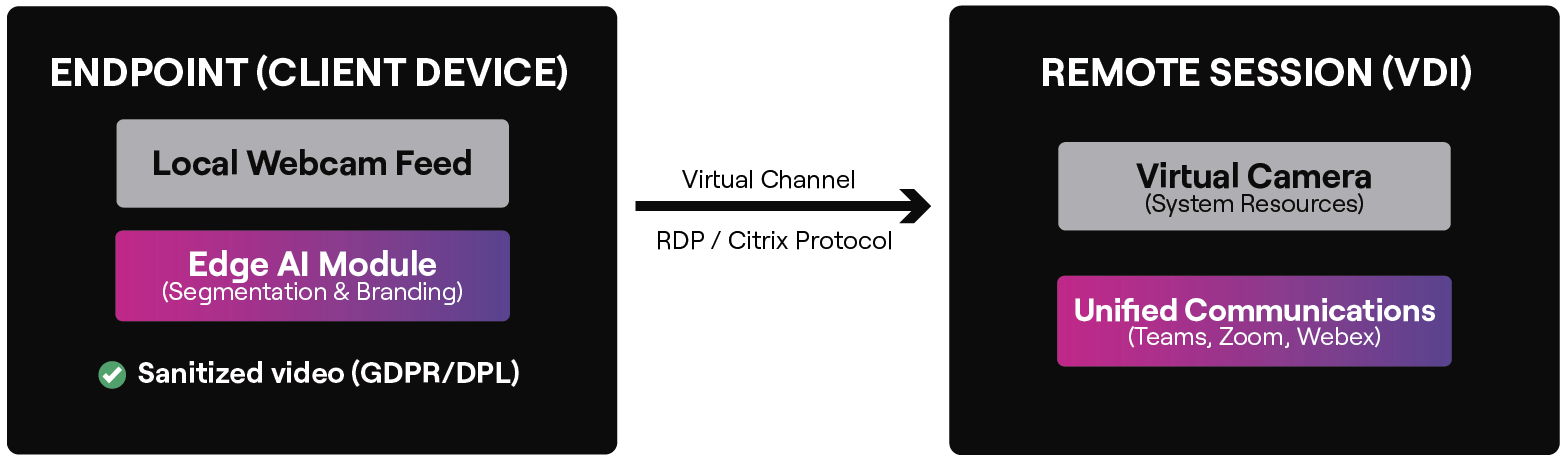
The research focuses on a background removal redirection module for RDP and Citrix environments. Using Virtual Channels, the system intercepts local webcam feeds to apply AI segmentation before transmission.
The technical approach optimizes Edge AI models for thin client and other endpoint hardware, ensuring real-time performance with low power consumption. The architecture also supports automated enterprise branding by inserting logos or backgrounds at the source. This methodology protects sensitive visual information before it leaves the local device, aiding compliance with GDPR and DLP standards.
Edge AI redirection for standardized integration
The research focuses on a background removal redirection module for RDP and Citrix environments. Using Virtual Channels, the system intercepts local webcam feeds to apply AI segmentation before transmission.
The technical approach optimizes Edge AI models for thin client and other endpoint hardware, ensuring real-time performance with low power consumption. The architecture also supports automated enterprise branding by inserting logos or backgrounds at the source. This methodology protects sensitive visual information before it leaves the local device, aiding compliance with GDPR and DLP standards.
our use cases
Concepts with real-world potential
These use cases present conceptual examples of how our ideas and technologies could address real-world industry challenges.

DaaS Virtual Camera Background Redirection
Enterprises adopting Desktop-as-a-Service (DaaS) solutions to support hybrid or remote workforces often face fragmented corporate branding during employee video conferencing.
Because employees connect from virtual desktops and diverse applications, ensuring consistent branded backgrounds across all sessions becomes difficult. This inconsistency weakens corporate identity and professional appearance in external meetings.

Standardizing video support professionalism for call centers and BPOs
Modern call centers and Business Process Outsourcers (BPOs) increasingly rely on video for customer service. Agents often work from home or in dense hubs using thin clients and virtualized desktops (DaaS & VDI). In these environments, video calls could expose distracting backgrounds and reduce perceived trust. A solution would require applying professional branding to all company agents’ screen backgrounds and allowing central management by the IT team without increasing server-side costs. However, integrating these solutions into DaaS & VDI environments poses a significant technical challenge due to the complexities of real-time video redirection and resource constraints.