




Fluendo awarded SPIRIT Open Call 2 grant: Introducing AIVATAR
daas-vdi, gstreamer, codecs, fluendo-codec-pack, fluendo-ai-plugins, remote-desktop-coding-tools, raven, lynxFluendo selected for SPIRIT grant to develop AI-powered avatar telepresence.
A specialized video codec for desktop remoting with reduced operational costs and improved user experience while remaining backward compatible with existing codecs and infrastructure.


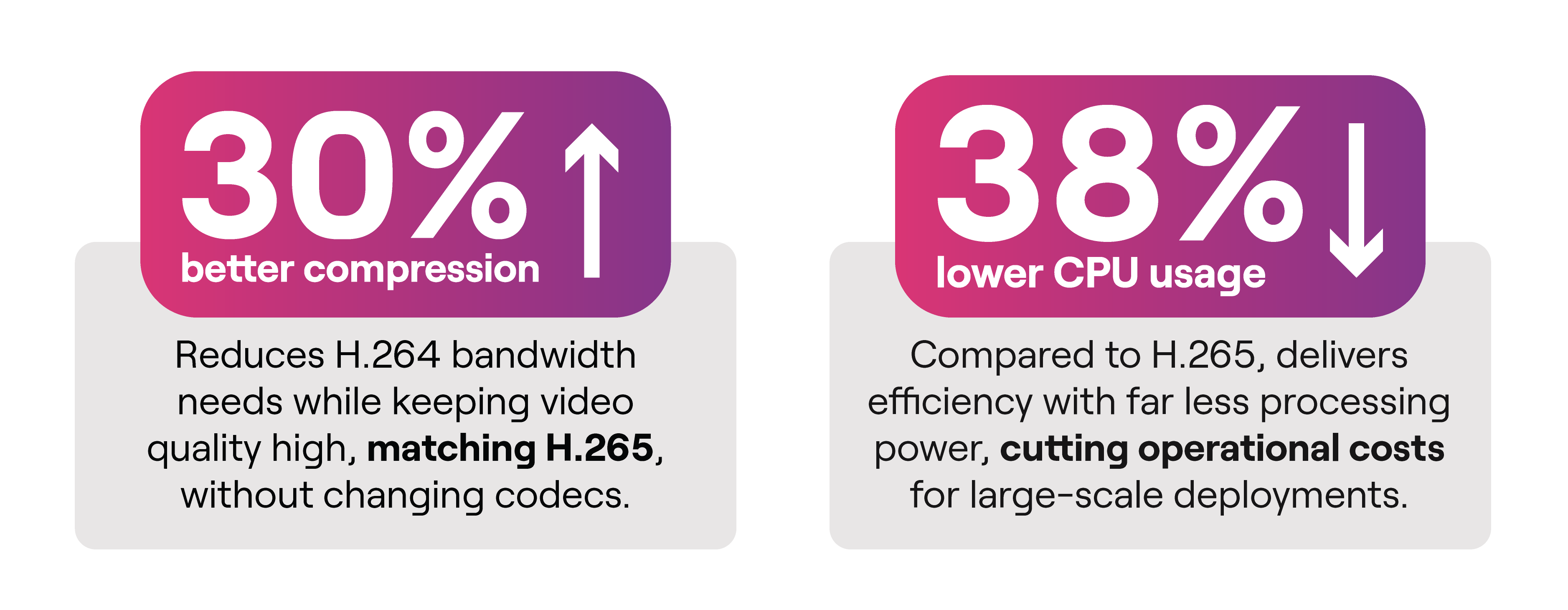
Deliver high-resolution and -quality video over any network, regardless of bandwidth constraints.
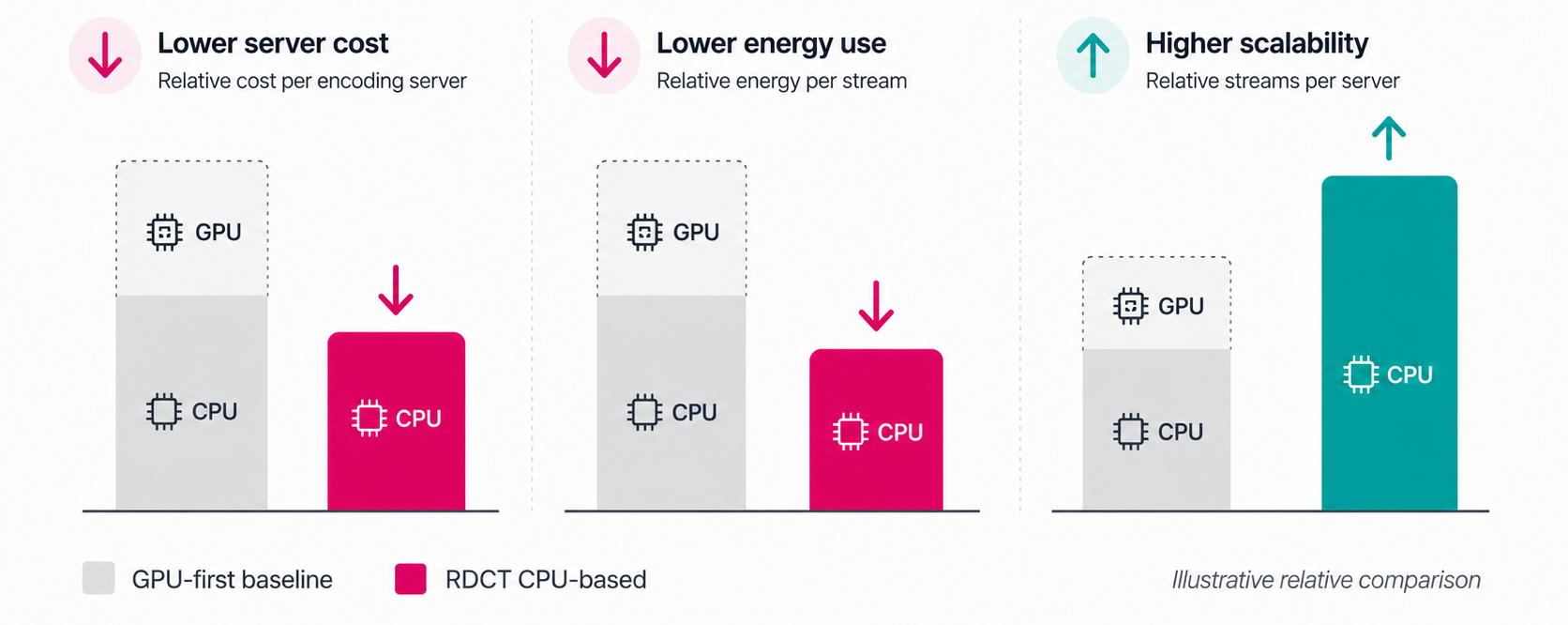
Reduce operational costs for streaming and encoding with an energy-efficient, greener codec.
A business-ready solution with patent reporting and licensing, fully compatible with your tech stack and infrastructure.
Deliver high-resolution and -quality video over any network, regardless of bandwidth constraints.
Reduce operational costs for streaming and encoding with an energy-efficient, greener codec.
A business-ready solution with patent reporting and licensing, fully compatible with your tech stack and infrastructure.
Remote Desktop Coding Tools (RDCT) reduces operational costs while improving user experiences. The codec empowers service providers with a more competitive and profitable offering while remaining backward compatible with existing codecs and infrastructure.
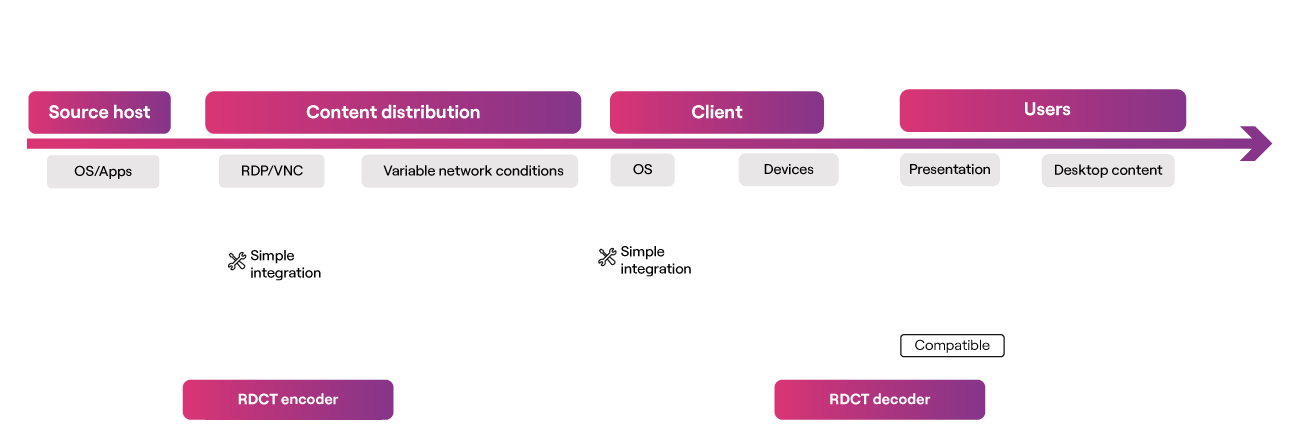
It integrates state-of-the-art coding tools and patent management with a streamlined API, ensuring risk-free integration with existing remote desktop protocols while optimizing performance for service providers and end users.

Remote Desktop Coding Tools (RDCT) reduces operational costs while improving user experiences. The codec empowers service providers with a more competitive and profitable offering while remaining backward compatible with existing codecs and infrastructure.
It integrates state-of-the-art coding tools and patent management with a streamlined API, ensuring risk-free integration with existing remote desktop protocols while optimizing performance for service providers and end users.

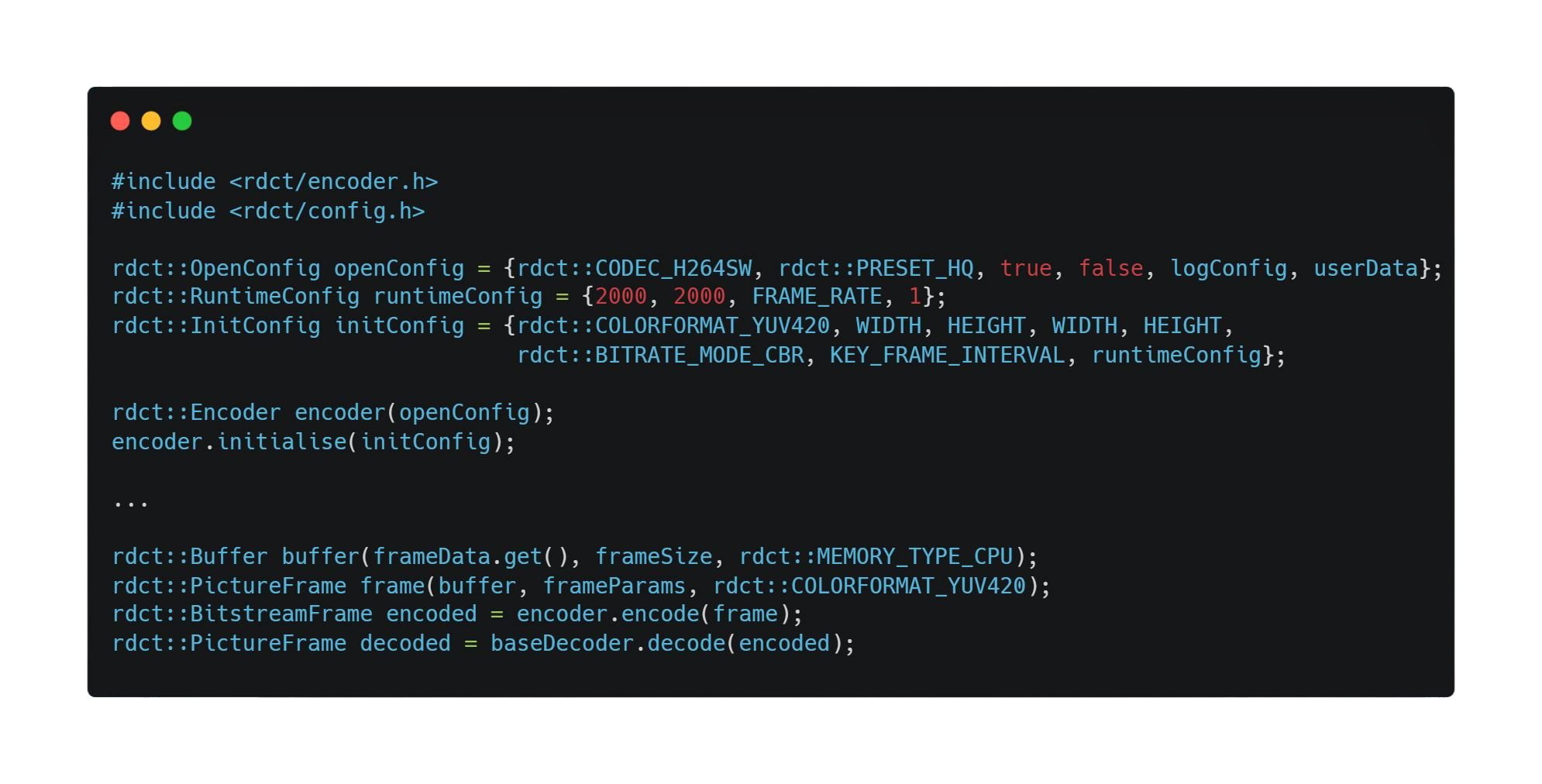
Capability to encode YUV 4:2:0 sequences into H.264 bitstreams, ensuring compatibility with industry standards.
Implements the enhancement layer using MPEG-5 Part 2 LCEVC, improving compression efficiency while reducing the encoding and decoding complexity of the base codec. Designed to be codec-agnostic, LCEVC enhances base codecs without modification, integrating with existing workflows and ensuring future-proof adaptability.


Implements the enhancement layer using MPEG-5 Part 2 LCEVC, improving compression efficiency while reducing the encoding and decoding complexity of the base codec. Designed to be codec-agnostic, LCEVC enhances base codecs without modification, integrating with existing workflows and ensuring future-proof adaptability.
Optimizes encoding parameters to achieve a better quality-to-bitrate ratio in desktop remoting scenarios compared to other general-purpose codecs.
Encapsulates all specialised coding tools, providing an intuitive, high-level interface for simplified integration.


Encapsulates all specialised coding tools, providing an intuitive, high-level interface for simplified integration.
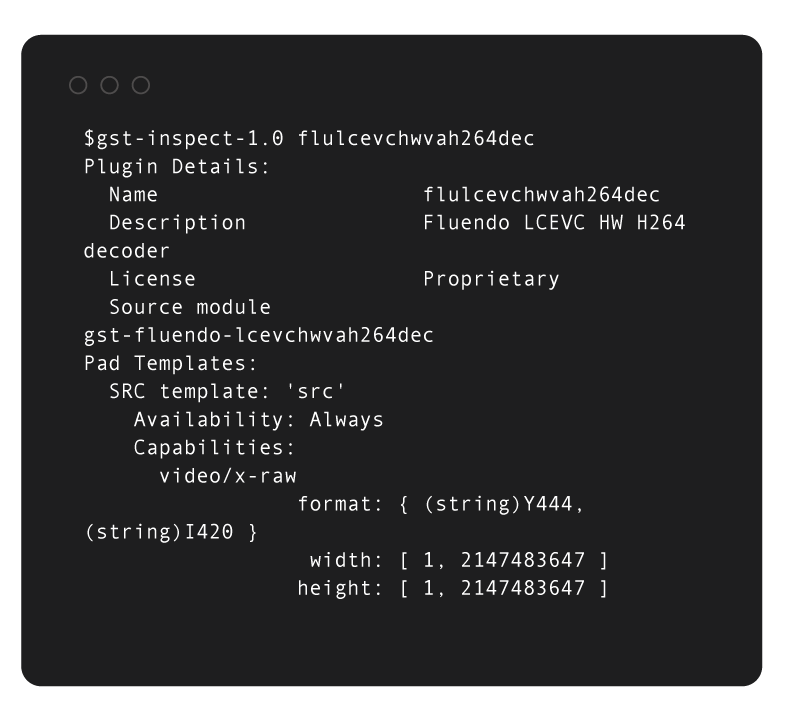
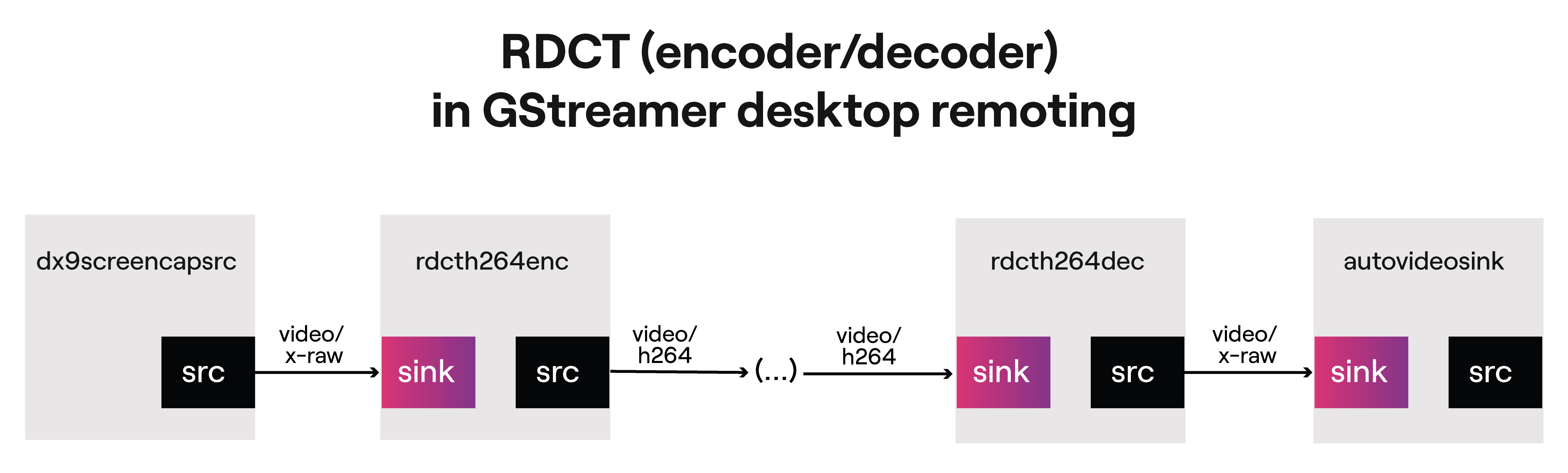
Implements the RDCT encoder and decoder as GStreamer plugins, ensuring compatibility with existing multimedia frameworks and the Fluendo Codec Pack.


Implements the RDCT encoder and decoder as GStreamer plugins, ensuring compatibility with existing multimedia frameworks and the Fluendo Codec Pack.
our use cases
These use cases present conceptual examples of how our ideas and technologies could address real-world industry challenges.

DaaS & VDI platforms must continually optimize for performance, scalability, and user experience. These platforms face increasing challenges due to high-resolution content delivery, fluctuating network conditions, and the growing demand for cost-effective scalability.
Standard video codecs often present trade-offs between visual fidelity and bandwidth consumption or processing load. These trade-offs become more pronounced at scale, directly affecting infrastructure costs, session density, and quality of service. Remote Desktop Coding Tools (RDCT), a hybrid solution based on H.264 enhanced with MPEG-5 LCEVC and desktop domain coding optimizations (including desktop content entropy tuning, region-of-interest coding, and improved color management), would offer a flexible and integrable response to these challenges.
The use of RDCT across the DaaS and VDI value chain would enable vendors and integrators to meet enterprise demands for performance, reliability, and cost-efficiency without requiring significant infrastructure overhauls.

Video encoders used in DaaS & VDI, even those with advanced Screen Content Coding (SCC) tools, must rely on computationally expensive intra- and inter-frame analysis of the video stream to understand the content’s complexity and motion, which consumes a significant amount of server-side CPU/GPU resources. This process is fundamentally inefficient for remote desktops because the encoder is working to deduce information that the virtualized operating system already knows intrinsically. This redundancy creates a direct and costly trade-off between visual quality and server density.
Bits & Bytes
Explore our blog, one byte at a time. Our team unpack our latest news, industry insights and in-depth articles to connect you with the multimedia world.Fluendo selected for SPIRIT grant to develop AI-powered avatar telepresence.
Enhancing FreeRDP performance with MPEG-5 LCEVC for DaaS and VDI.
Optimizing DaaS/VDI performance with LCEVC and x264.
Fluendo unveils Lynx and RavenIQ at IBC 2023 in Amsterdam.