HYPE: HYbrid Parallel Encoder
gstreamer, open-source, cheetahMaximizing encoding efficiency with HYPE's hybrid parallel architecture.

Cheetah explores the usage of multi-core parallelization to slash transcoding times and boost resolution without changing the stack. A codec-agnostic meta encoder combines hardware and software resources to multiply encoding speeds, leveraging all machine resources to accelerate VOD encoding and improve live streaming resolutions.

Modern hardware often features many CPU cores and dual GPUs. Despite this, traditional video encoders do not scale linearly with many cores, underusing hardware by employing only a single core per encoding session. Moreover, GStreamer lacks native logic to select the best hardware for each pipeline, leaving this complex task to applications.
As demands grow for faster VOD encoding and 8K live streaming, a new architecture must efficiently orchestrate multiple GPUs and CPUs.
Modern hardware often features many CPU cores and dual GPUs. Despite this, traditional video encoders do not scale linearly with many cores, underusing hardware by employing only a single core per encoding session. Moreover, GStreamer lacks native logic to select the best hardware for each pipeline, leaving this complex task to applications.
As demands grow for faster VOD encoding and 8K live streaming, a new architecture must efficiently orchestrate multiple GPUs and CPUs.
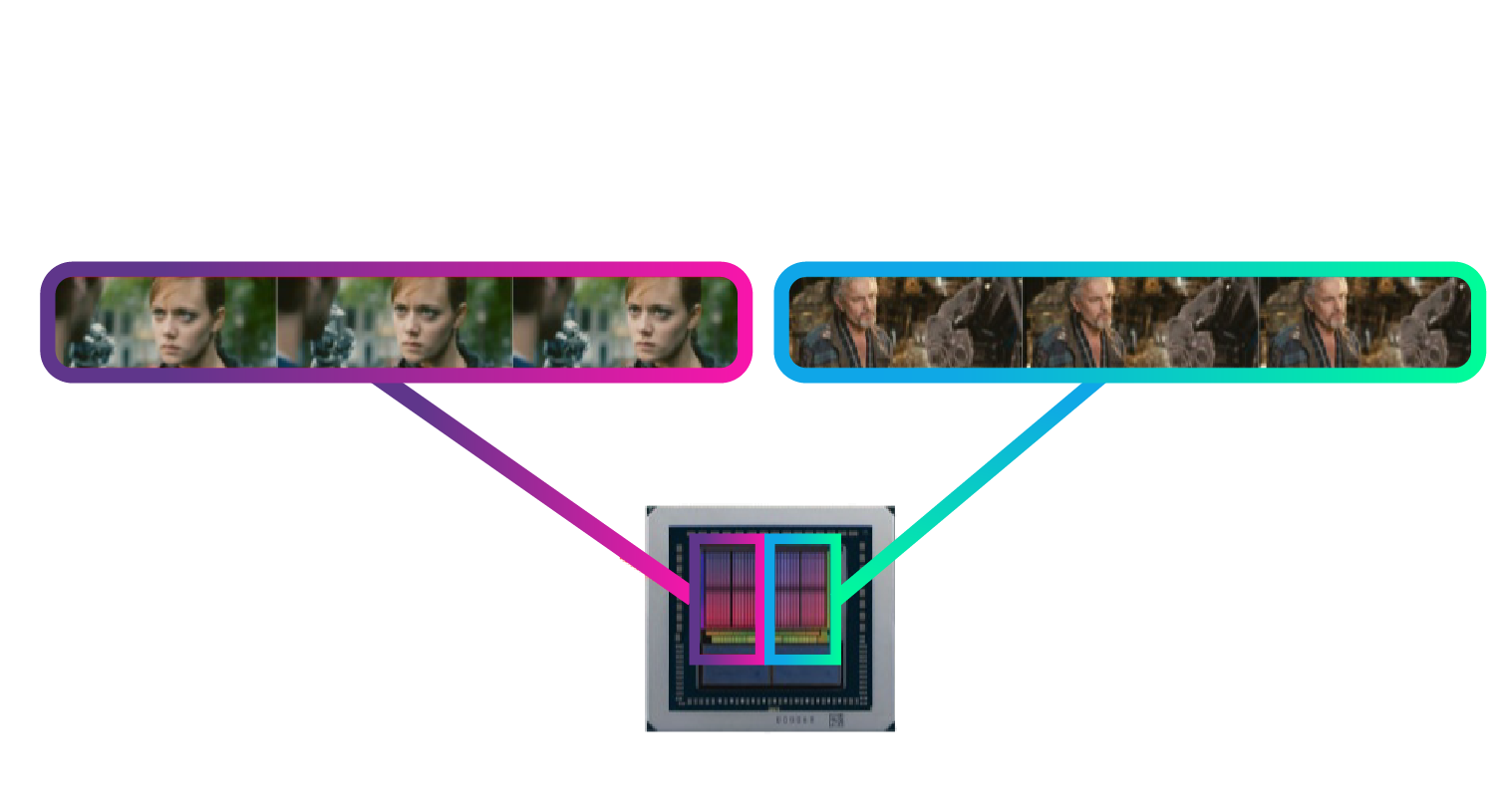
During Cheetah research, a hybrid parallel encoder, Hype, was developed; a GStreamer proxy bin plugin that balances system load by analyzing resources and selecting the best hardware devices. Instead of traditional slice or frame-level parallelism, Hype uses time-slicing based on scenes or Groups of Pictures (GOP). This enables high parallelization while maintaining consistent quality per scene.
Hype is codec-agnostic, supporting formats like H.264, H.265/HEVC, AV1, and VVC.
Bits & Bytes
Explore our blog, one byte at a time. Our team unpack our latest news, industry insights and in-depth articles to connect you with the multimedia world.Blog
Read more about our work
HYPE: HYbrid Parallel Encoder
gstreamer, open-source, cheetahMaximizing encoding efficiency with HYPE's hybrid parallel architecture.